
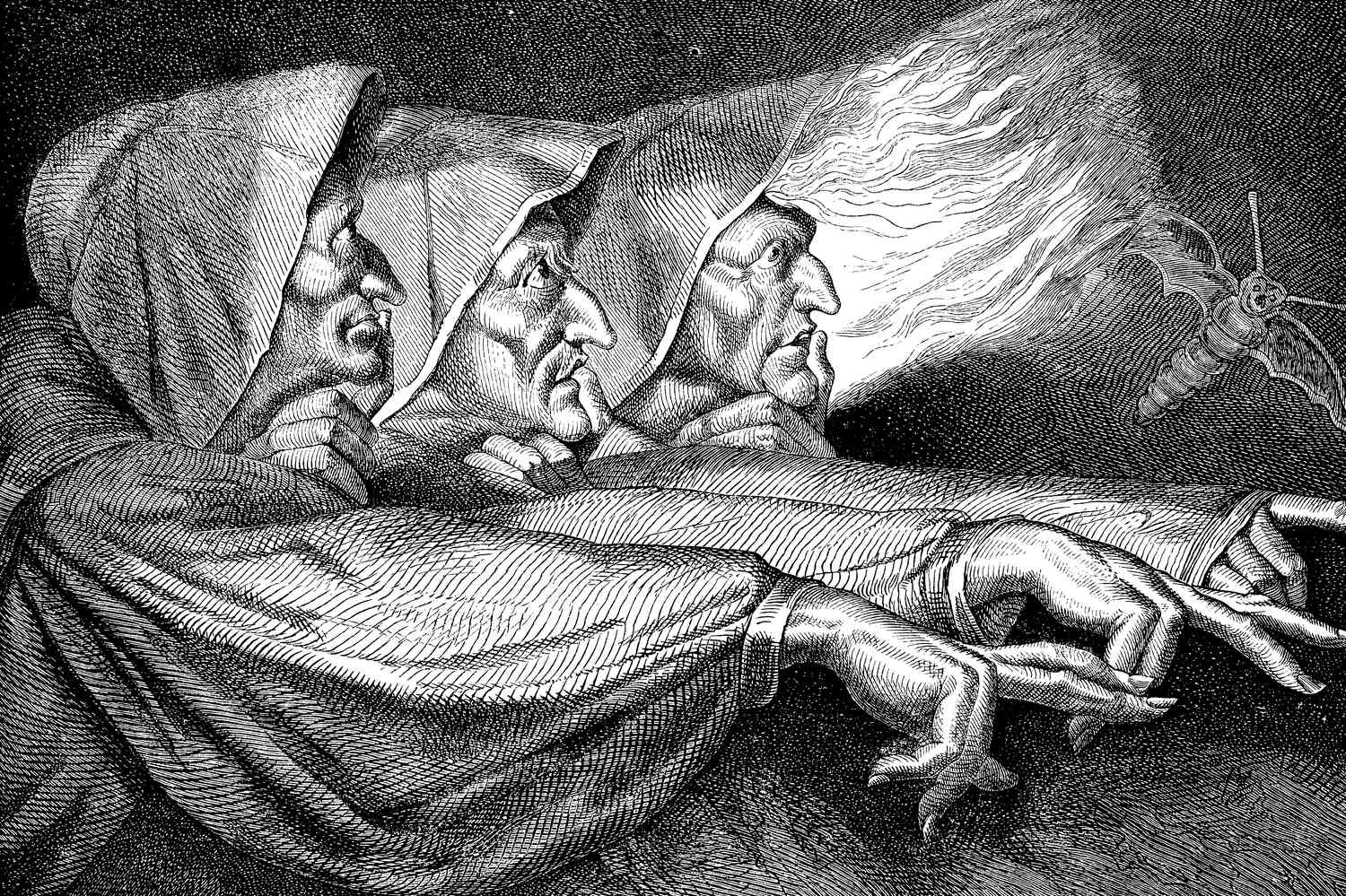
Why the start of Macbeth is so effective – and slightly terrifying (especially for a contemporary audience)
“When shall we three meet again”
The opening scene of Macbeth may only be short, but it’s a powerhouse of mystery, mood, and meaning. Here’s why Shakespeare starts the play exactly this way, and why it matters.
Summary of Act 1 Scene 1
The play begins with three witches meeting in a storm. They speak in strange, rhymed couplets and cryptic phrases:
“Fair is foul, and foul is fair”
They decide to meet Macbeth “upon a heath“, before vanishing into the mist. That’s it. No Macbeth, no murder, no battle. Just three very unsettling figures and a whole lot of foreshadowing.
Why this opening is so effective
- It Sets The Mood Immediately
From the very first line we’re plunged into:
Thunder, lightning, and chaos
Rhythmic, unnatural language
Supernatural presence
It screams: Something wicked this way comes.
The tone is dark, eerie, and suspenseful – perfectly matching the tragic and violent story that follows.
- It Builds Anticipation For Macbeth
Macbeth is named in line 8, but we don’t see him until Scene 3. Why does that matter?
Because it creates mystery and curiosity.
The audience immediately asks:
Who is Macbeth?
Why are the witches interested in him?
Is he good or evil?
By the time he enters, we’re already expecting something powerful, maybe even dangerous.
- It Uses Form And Sound To Create Unease
The witches speak in trochaic tetrameter (a jumpy, stressed-first rhythm), unlike most characters in Shakespeare’s plays, who speak in iambic pentameter. The difference in rhythm makes their speech sound:
-Unnatural
-Incantatory
-Otherworldly
It sets them apart from the human world. They are agents of chaos, not people with regular motives.
- It Establishes The Supernatural As A Driving Force
In many tragedies, human error causes downfall. But in Macbeth, the supernatural appears to be involved from the beginning. The witches aren’t just a spooky backdrop, they seem to be pulling the strings.
Their influence questions whether Macbeth has free will, or if fate already controls him.
So why did Shakespeare start this way?
To grab the audience’s attention from the start (especially in the noisy Globe Theatre).
He sets the tone for moral confusion and inversion.
He hints at themes of ambition, deception, and darkness without stating them outright.
He frames the whole play as a world where the natural and moral order is flipped.
Essay-ready takeaway
The opening of Macbeth is dramatically effective because it immediately introduces a mood of uncertainty and danger, establishes the witches as key figures, and foreshadows the play’s central themes – all before the title character appears.
Want to go deeper?
Try analysing the witches’ language (alliteration, rhyme, paradox, chiasmus).
Ask: what would the play feel like without this opening?
Struggling with Shakespeare? I offer tailored, supportive GCSE English tutoring that build confidence and clarity. Book a free discovery call here to see how I can help.